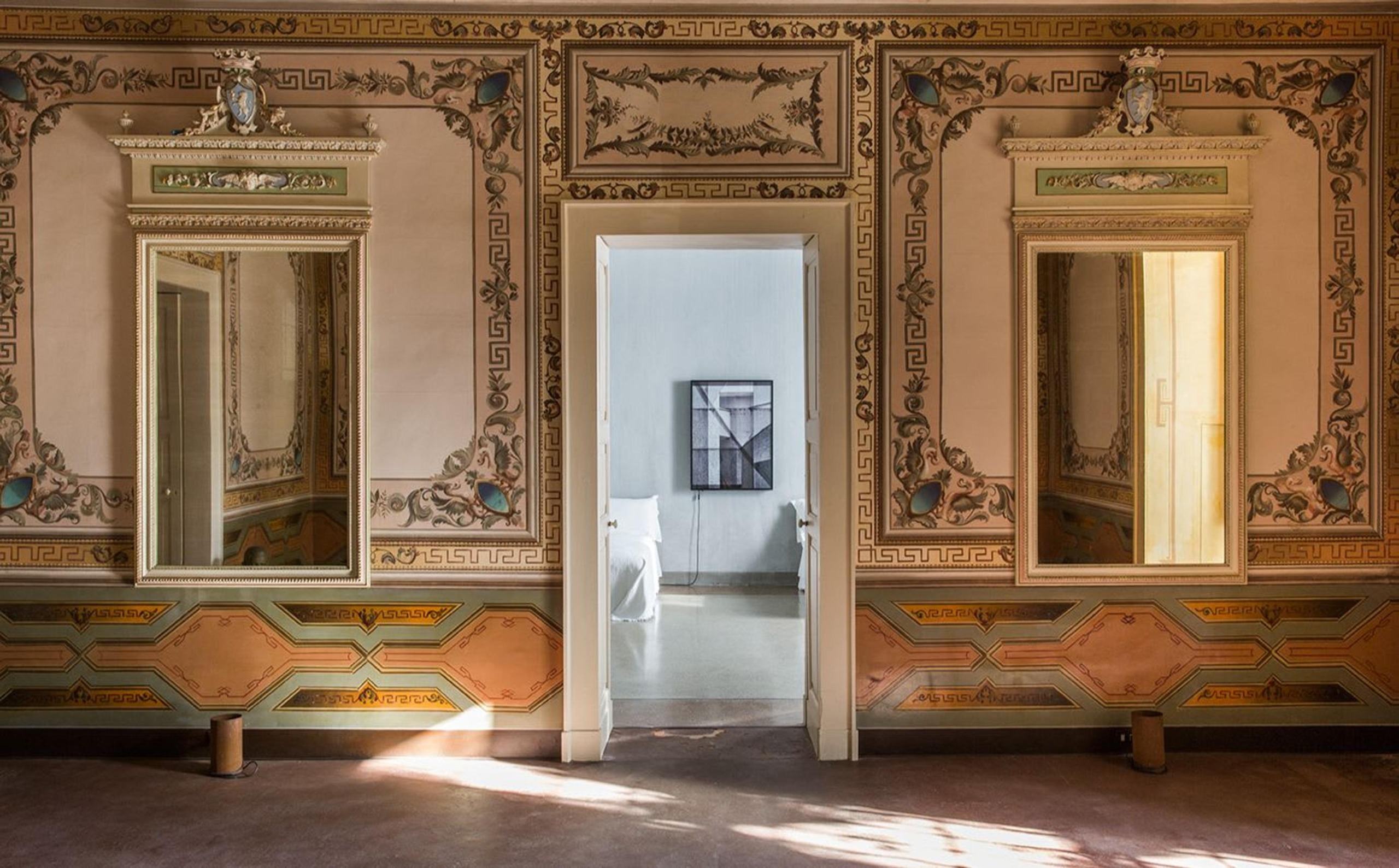
Across Milan this week, the most compelling rooms were not the newly created ones. I wasn’t there in person this year, but even from afar, certain rooms kept surfacing.
The level of work on display was, as ever, exceptional – carefully considered, beautifully made, and forward-looking. Many of the installations were richly composed, immersive environments in their own right. But what stayed with me were the palazzos – rooms that required almost nothing at all.
Alongside these, there was a more restrained approach – one less concerned with spectacle and more with how design sits within what already exists.
That sense of tension – between expression and restraint – ran through Milan this week.
Even within more authored settings – such as Vincent Van Duysen’s reworking of Palazzo Molteni – there is a similar discipline at play. A sense that the architecture is not something to be overridden, but quietly held.
The spaces are not staged to impress. They feel lived in – as though they have been there for some time.
Frescoed ceilings. Worn stone floors. Rooms shaped by centuries of use, alteration, and quiet presence. Architecture that holds its own.
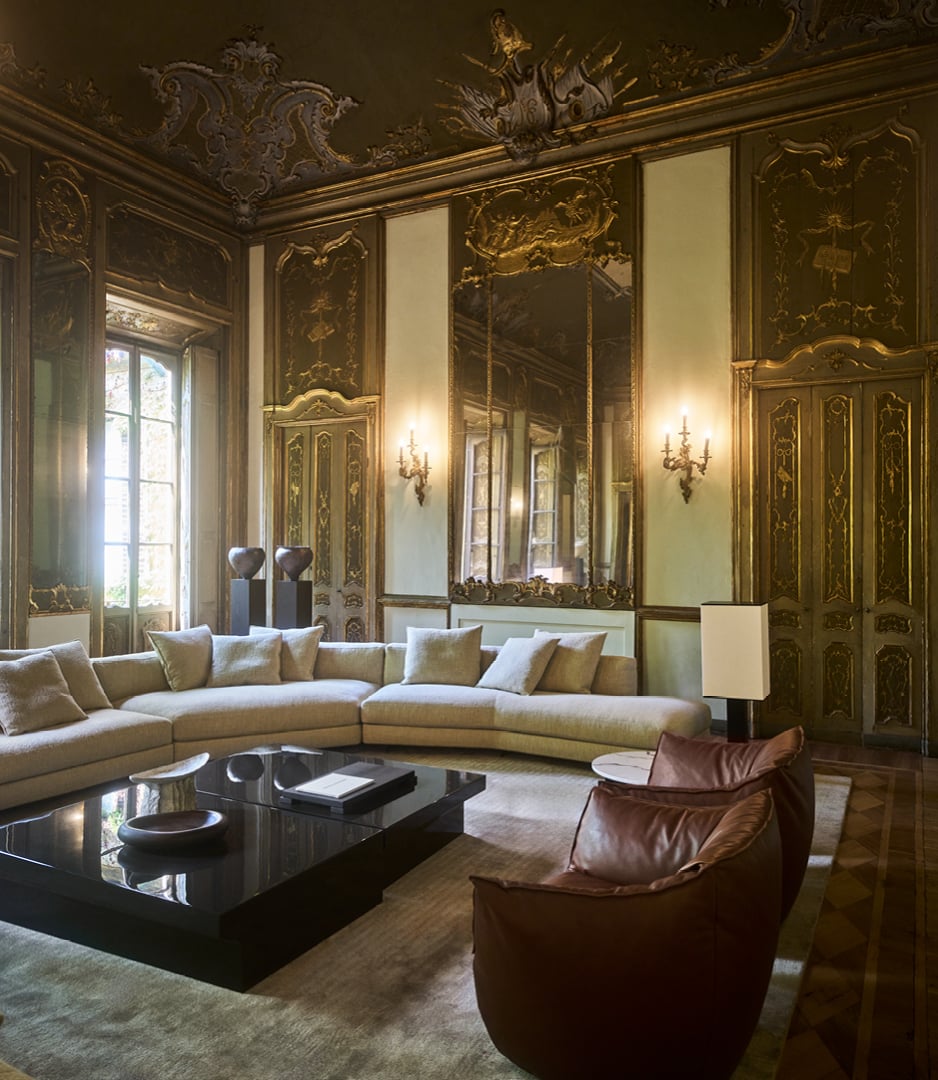
Image: Poliform, Milan Design Week
What felt striking was not the contrast between old and new, but the composure with which they were allowed to coexist.
Contemporary pieces by houses such as Poliform and Flexform, sit within these interiors with notable restraint. Low, sculptural sofas rest beneath elaborate ceilings without attempting to echo them. Tables in stone or metal hold their own weight without ornament. Nothing is scaled to compete with it. Nothing tries to match what was already there.
The instinct, elsewhere, is often to respond to history with more of it. To layer, reference, or soften. Here, the opposite approach prevailed. The architecture remained intact – expressive and complete, while the furniture operated as a quiet counterpoint.
On paper, it is a small distinction; in the room, it is everything.
The rooms were not styled to reconcile two eras. They were left unresolved, in the best sense. The tension between them – between permanence and immediacy – was what gave the spaces their charge.
There is a discipline in this kind of restraint. A willingness to leave parts of a room untouched, even when the temptation is to intervene. To recognise when a space already holds enough visual and emotional weight, and to respond with clarity rather than embellishment.
It is an approach that extends beyond Milan – seen in contemporary Italian interiors where historic structures are left largely untouched, and the intervention is deliberately minimal.
The same instinct can be seen in places such as Palazzo Daniele, where ornate architecture is left to speak, and contemporary pieces are introduced with a similar restraint.
In many of these spaces, the furniture does not attempt to define the room. It grounds it, bringing the scale back to the human body – somewhere to sit, to pause, to inhabit – without competing with the architecture that surrounds it. The result is neither minimal nor maximal. but something more measured – a form of editing that allows both past and present to remain legible.
What emerges is not a dialogue, exactly, but a kind of alignment.
The past is not preserved as a backdrop, nor is the present imposed upon it. Instead, each is given its own space to exist – and the atmosphere forms in the distance between them.
Sometimes, its role is simply to hold the room.
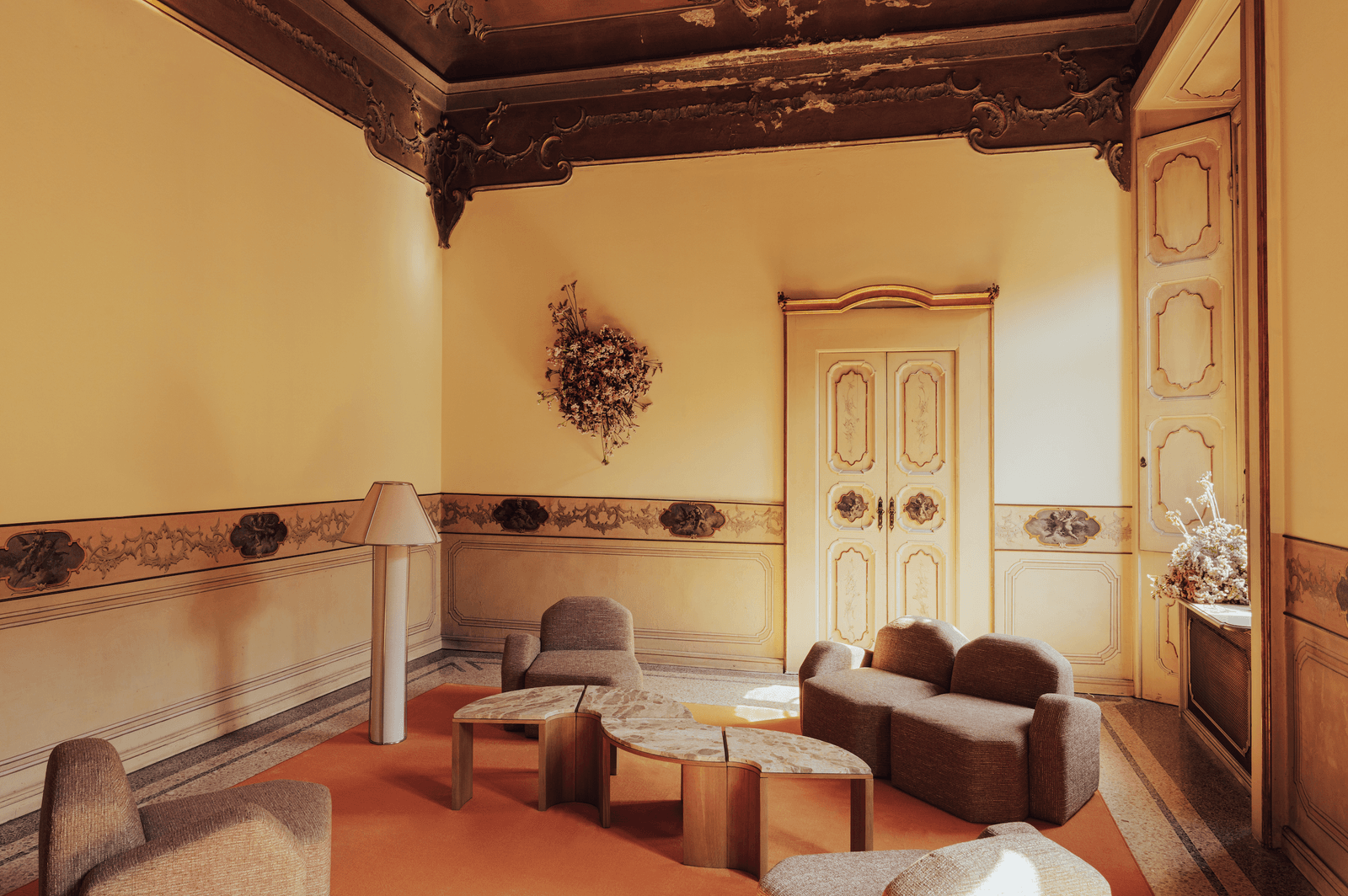
Image: Piergiorgio Sorgetti H&M HOME x Kelly Wearstler at Milan Design Week
